Steal Lab
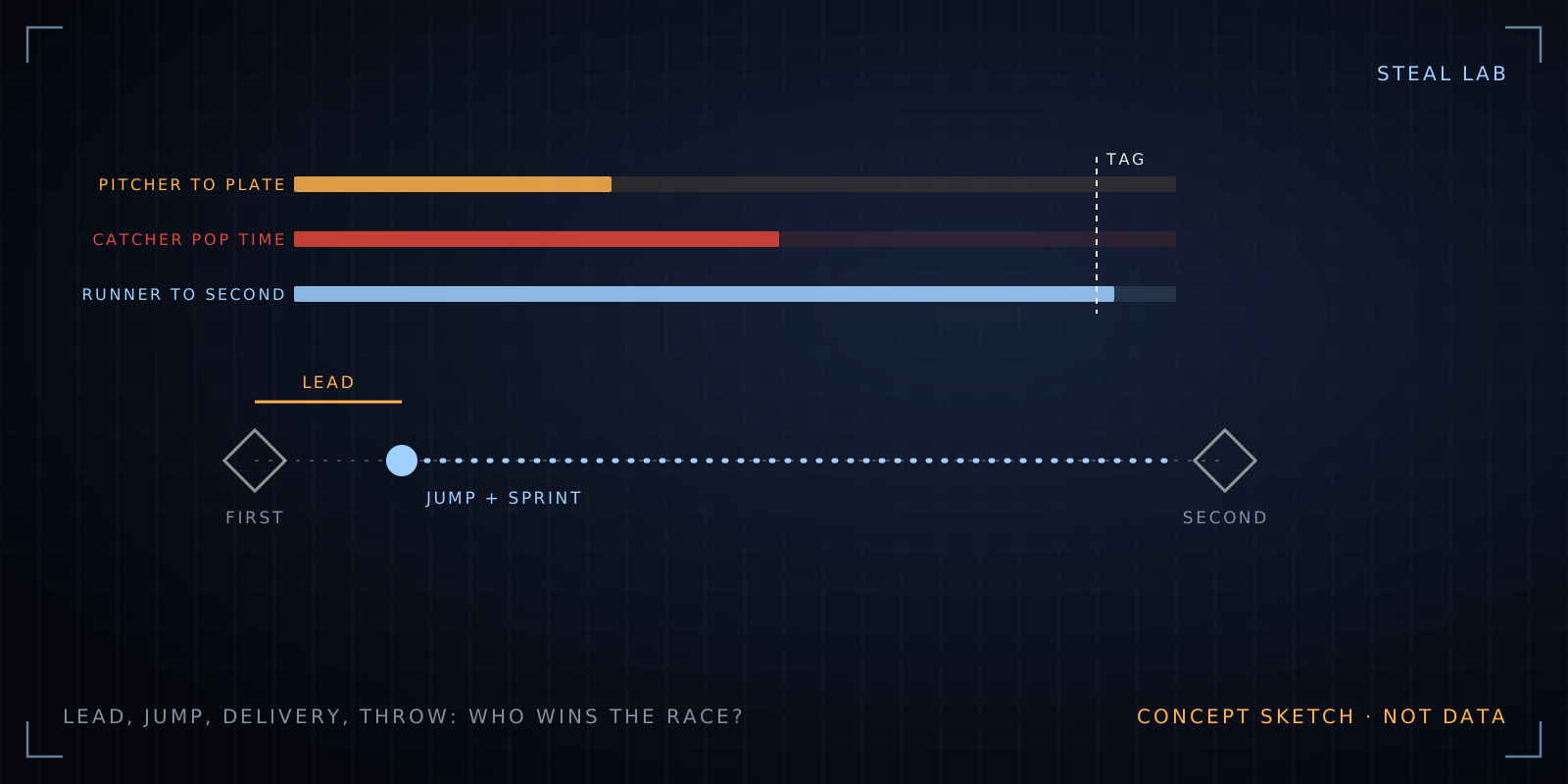
Speed alone doesn't steal bases. Break every attempt into the runner's lead and jump, the pitcher's delivery and the catcher's throw, and see what actually wins the race.
- Coach questions
- 2
- Asked on air
- 7×
- Top question
- Q-21
Coach questions it could answer
The playbook →- What actually makes a successful base stealer?
Split every steal attempt into the runner's lead, jump and sprint speed against the pitcher's time to the plate and the catcher's pop time, and measure how much each piece moves the odds of being safe.
- What do baserunning decisions and technique cost in wins?
Add up the runs gained and lost on the bases, from steals, extra bases taken and outs made running, and turn them into wins for each player and team.
Data it needs
The data lake →0 of 3 on hand; the rest arrives in phase 3, Every play.
The question
Stolen bases jumped after the 2023 rule changes, bigger bases and limits on pickoff throws. But the fastest runners aren’t always the best base stealers. What actually separates a good one, and what does good or bad baserunning cost a team over a season?
How it would work
- For each steal attempt: the runner’s lead and jump, his sprint speed, the pitcher’s time to the plate and the catcher’s pop time.
- A model of the chance of being safe from those pieces, so each runner’s success can be split into speed, jump and the battery he faced.
- A baserunning ledger: runs gained or lost on steals, extra bases taken and outs on the bases, per player and per team.
First version
- Every steal attempt of second base in one season, with the race drawn as four timers.
- A leaderboard of base stealers by success above what their speed alone predicts.
The data
Statcast baserunning data (sprint speed, lead distance, jump), pitcher running-game times and catcher pop times, plus play-by-play for steal outcomes.
What it needs
- Linking the pieces. Lead, jump, delivery and throw times come from different leaderboards and need to be matched attempt by attempt.
- Before and after 2023. The rule changes moved the baseline, so the model has to be fit separately or adjusted for era.
Status
An idea on the launchpad. Nothing is built yet.